Regenerative Design
Where land, people, and systems recover together
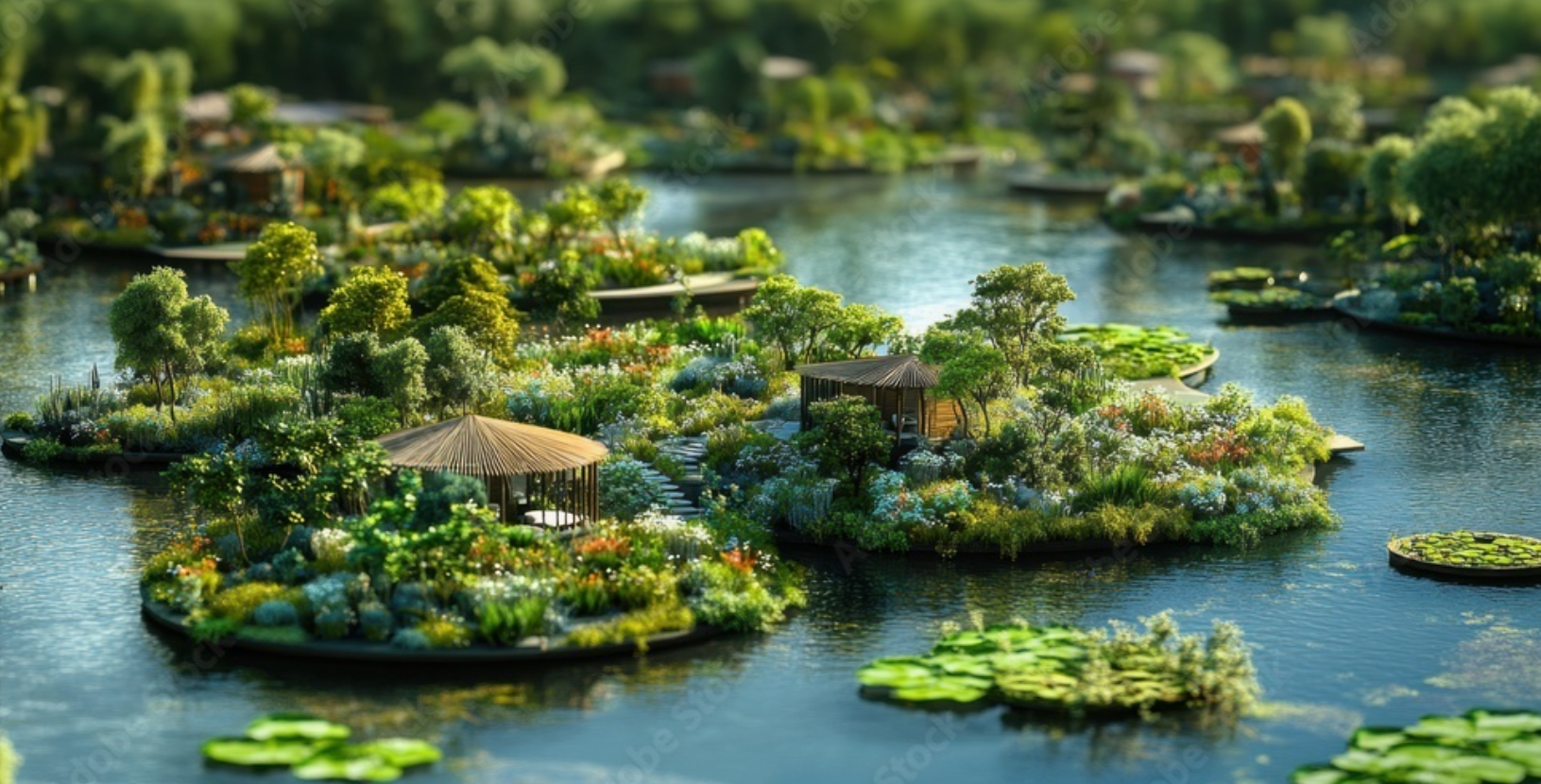
For our team, "Regenerative Design" is the creation of systems that restore land and soil, strengthen culture and tradition, build sustainable economies, improve livelihoods, and expand human capabilities, and builds adaptive capacity. By aligning modern technology with place-based knowledge, living ecology, and long-term stewardship, the land, people, and systems recover together.
To new visitors to our Regenerative Design studio, please read the following section before entering the Design Assignment Portal where commissioned work is being handed out to the design community.
Regeneration Begins with Living Intelligence
IIn our design studio work, regeneration begins with lived knowledge. - Indigenous regenerative practices evolved over millennia and reflect tested relationships between land, climate, and culture. - Ancient traditions encode climate adaptation, social organization, resource logic, and respect for biodiversity. - Technology is introduced only after these forms of intelligence are understood and then applied in service of them. Our framework starts with an act of remembering and recognizing that many systems already knew how to work, and that modern tools are most effective when they strengthen existing relationships rather than replace them. For designers, this means listening before designing. It requires observing how land, culture, and daily life in a place traditionally functioned and what continues to function, identifying what is resilient and meaningful, and using contemporary tools and technology to support and extend those patterns with care and restraint.
Human Systems Are Part of the Ecology
Contemporary thinking often positions humans as external to ecological systems, responsible primarily for extraction and mitigation. Some approaches focus narrowly on reducing harm. Others promote sustainability without reference to ecological capacity, thresholds, or long-term consequences. This framing is incomplete and ultimately destabilizing. In our regenerative design framework, human systems are understood as inseparable from ecology itself. Economic structures, labor practices, social systems, material use, and governance arrangements actively determine how land is stewarded, how resources circulate, how value is created and distributed, and how environmental and social conditions evolve over time. Because these systems are intertwined, ecological health and human well-being cannot be evaluated in isolation. A rigorous definition of regeneration must address both simultaneously, with equal attention to land, people, and the mechanisms that connect them. - A system that restores land while depletes people does not regenerate. - A system that empowers people while eroding land does not regenerate. Regeneration occurs when human and non-human systems recover together, expanding shared capacity, resilience, and long-term vitality. For designers, this means treating every decision as both ecological and social in consequence. Form, material, program, and spatial relationships should be tested not only for beauty and performance, but for how they support long-term stewardship, human dignity, and the capacity of place to thrive over time.
Place Is the Author
Place is treated as an active source for design inspiration. - Place, people, livelihoods, and geography dictate form. - Culture and climate dictate material logic. - Concepts of equality and fairness influence design decisions. Design emerges from place. It is drawn out, refined, and made tangible for the present. This is why such projects feel essential, grounded, and inevitable. For designers, this means allowing place, history, and tradition to lead. Design work begins with reading the land, understanding how people live and move through it, listening to the stories the land holds, and translating those insights into form, material choices, and function rather than imposing a predetermined aesthetic.
Circularity Leads to Regeneration
Circular systems are fully integrated across water, energy, food, fuel, waste, and carbon. Circular materials and services function as foundational infrastructure, enabling lifestyles that regenerate ecological, social, and economic systems over time. Within this framework, circular resource systems do not exist as standalone technical solutions. They operate as enabling conditions. Regeneration is evidenced by durable, compounding outcomes that strengthen place and community across generations. - Local livelihoods that are stable, skilled, and rooted in place - Knowledge systems that are practiced, taught, and continuously evolved - Communities with increased capacity to steward land, resources, and institutions - Cultural practices that sustain both identity and economic participation When circular systems are designed as platforms for long-term capability, they move beyond efficiency and become engines of regeneration.
Regeneration Builds Capacity
In regenerative design, success is understood through what grows stronger over time. The measure is not a single outcome or finished state, but whether a place, its people, and its systems gain the ability to adapt, steward, and thrive across generations. Capacity is built when people deepen skills, knowledge, and agency. It is built when land becomes more fertile, resilient, and productive. It is built when culture is remembered, practiced, visible, and economically viable. It is built when systems are intuitive to maintain and aligned with natural cycles. Regeneration is therefore an ongoing process, not a fixed achievement. Like our definition of wellness in the accompanying design room here in our digital studio, it is experienced through continuous renewal. Each design decision shapes ecological health, social relationships, cultural continuity, material flows, and the long-term capacity of people and place to care for and thrive another. Regenerative design holds these dimensions together, intentionally and over time. For designers, this means working with time as an ally. Designs should be conceived not only for how they function at completion, but for how they will be lived with, learned from, adapted, and strengthened as people and place evolve together.